Cat Collection?
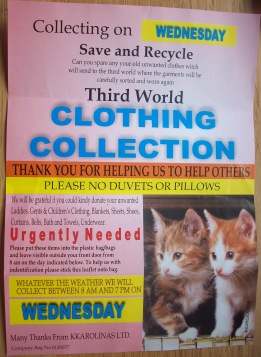
I’m sorry, but if your advert for a ‘clothing collection’ also features a cute couple of kittens for no discernible reason, is it so unreasonable for me to assume that your plan is to skin some cats? (A quick search reveals that it’s clearly not a real charity, incidentally, and they include ‘bath and towels’ on the list of suggested donations. Not sure that a bath would be the the most sensitive donation imaginable.)
I did have the pleasure of seeing a (bona fide) charitable performance of The Tempest on Saturday night in director Kat‘s (magnificent) garden. Abi stole the show as Caliban, it must be said, although it was very well done all round and just a pretty cool thing for a bunch of neighbours to put together of their own volition. As always with Shakespeare I find that already being familiar with the play beforehand to some extent really helps to enjoy it. We’re going to the Globe to see something new on Thursday, however, so I can test my appreciation of ‘new’ Shakespeare too.
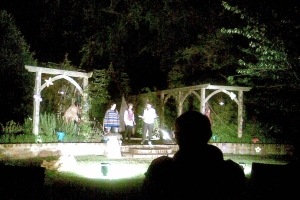
Nice garden, no?
(I am frequently curious about the original performances of these plays. Were some big hits and others flops? Could that shorten or prolong a run? Did people decide to go to the theatre based on what was on, or did they just turn up and see? If the Elizabethans had tweeted, would @lmason17thC have heard of @williamshakespeare? Or did you have to be local* / rich / local and rich?)
Am now off to see the twenty-first century’s @lmason17 – I wish everyone returning home from muddy festivals the very best of bathing!
Promise I’ll be kind,
But I won’t stop until that dukedom’s mine
Mila-milanesi
(*OK, he was local once. Ish.)

I’m in love with you like it was the first time (Like the very first time)
I’m still loving you like it was the first time (Like the very first time), yeah
Woah woah, and I will never leave ya (I will never leave)
Woah woah, and I will never leave ya
We were so close, once.
I still remember bringing you home for the very first time, all shiny and new. I was so young; you were so fun. We’d stay up late together, just you and me, showing the world what we were made of. Fiery. Boom boom boom, shoot them all down, dead dead dead.
It wasn’t always easy, of course, but I think that was half the fun. You tested me and made me better. Sometimes you made me feel like a failure, but I kept trying to win your favour, and then all of a sudden I’d be top of the world again in your eyes.
At first we were sharing with my parents in that run-down old place, but later we moved to somewhere brand new and all ours. Our lives became faster, bigger, better. You were maturing too. In the old days you would suddenly crash into oblivion, and it was down to me to rescue you. Now everything seemed more stable.
And then I had to leave.
I can’t explain now, looking back, why you couldn’t come with me. Somehow, deep down, I just knew it wasn’t to be. We were magnificent together, yes, but I was hooked on you – like a drug – and I needed to get away. I had to live my own life. I had to be free.
I kept a few things to remind me of you, of course. Bits and pieces, here and there. And of course, I still had to see you sitting there every damn day. Your cool, silent exterior. Your smooth façade. I looked. You never looked back. Until…
I call it comeback
I’ve seen the whole map
And I’ll be back by the evening
Back together
Did you miss me, Worms 3D?
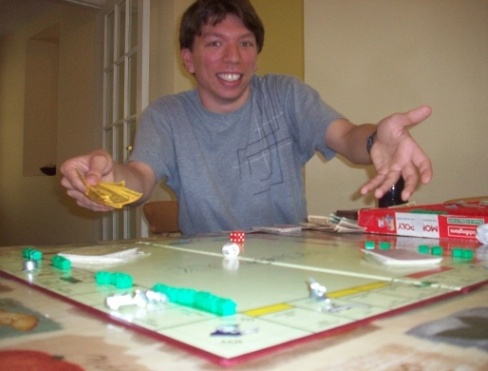
I’m back!
For once, I am Monopoly King
Now, I’m pretty unapologetic about enjoying holidays, so I won’t bother to go through that tiresome ‘moan unconvincingly about your holiday’ ritual designed to make other people feel good about their non-holiday. Also, it was only Dartmoor, so you’re unlikely to feel uber jealous that you haven’t marvelled over such sights as England’s tallest waterfall. (I have. Fact.) Nevertheless, it was lots of fun  There was even an outdoor pool which – in Britain! – somehow managed to stay warm…
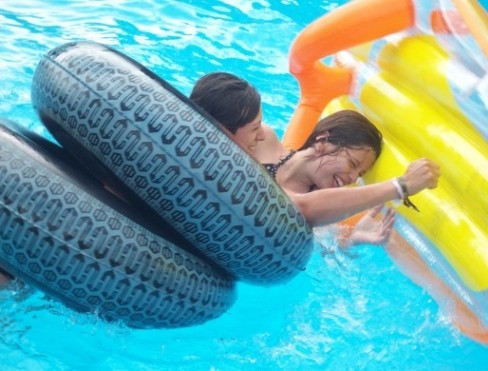
Fun in the pool
With non-existent mobile reception where we were staying I was able to devote ample chunks of time to reading Brideshead Revisited and Book Club’s The Bird Room. As a family we also watched plenty of films: Fight Club (excellent), Cars (sorely needs a public transport sequel), Black Hawk Down (like watching someone else play a computer game), The Black Dahlia (eh?) and Downfall (also excellent). (I have to admit to walking out of the first volume of Kill Bill after about half an hour, bored and feeling like I’d been watching a PowerPoint made for a film studies class.)
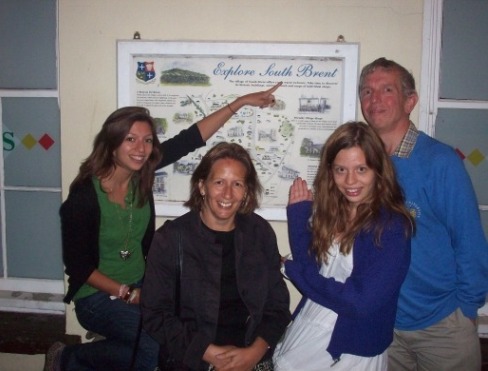
You travel to the other side of the country and arrive at… South Brent?!
There isn’t really much else to say, other than the full album will be on Facebook… soon 
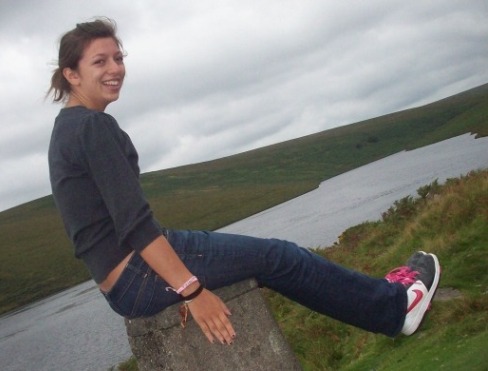
Look – countryside! (Scary cows not pictured)
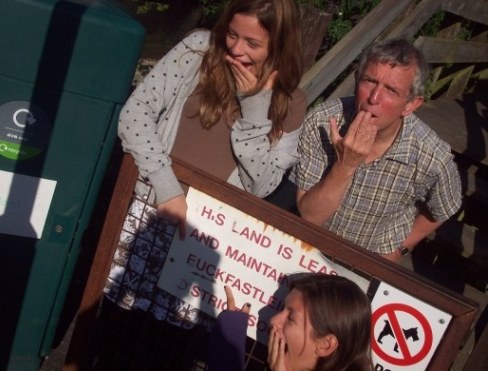
Policing moral rectitude
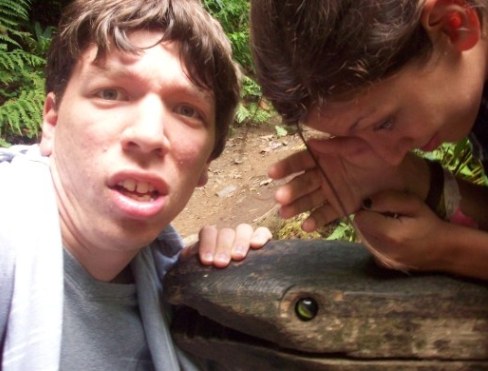
Watch out for my new wildlife show, starting soon
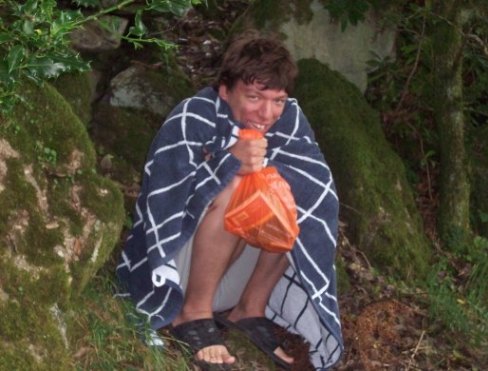
Auditioning for the role of Steen
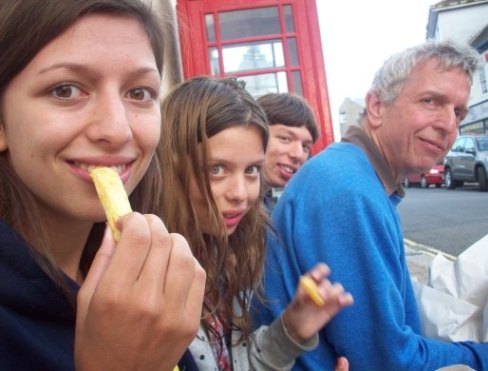
Fishin’ and chipin’ it on the last night
Or so it feels at the moment – I’m off to Devon tomorrow with the rest of the Selfs Selves Selfs Selves family for a week, which will be another week spent being grateful that I haven’t agreed try and squeeze a dissertation into my summer. This evening I got back from seeing Lucy on a trip which included me playing Scrabble (I came third but not last, which is what I will hold on to), many baby photos and a trip to Drayton Manor theme park. I really do hope that I never stop enjoying rollercoasters, because it really would open up a bit of a void in my schedule of experiences which justify being alive but don’t make me fatter. Really, what’s not to love?
(However – and I know I already tweeted this, but this is my blog, and I always drive to deliver true cross-platform synergy in my core online activities to enable inspirational user experiences – there is something infuriatingly niggling about a sign with physics mistakes in. At least with spelling and grammar you can console yourself that language evolves blah blah blah, but the units of acceleration are never going to evolve into those of velocity, and if you try and apply one instead of another there is a very real chance that the rollercoaster will break and kill us all. ‘G-force’ is a measure of acceleration measured in metres per second per second. Also, converting to imperial units will not magically divide this by time. That is all.)
Here’s a very quick example of one gigantic leap in logic:
It is amazingly unpredictable how some old patients survive when everyone has given up hope and some young patients succumb to disease. Makes me believe in God.
This was posted in the comments of a blog post about US healthcare reform, and not in a theological discussion, and so I intend to use it merely as an example of a strange kind of thinking. Broken down into parts:
“It is amazingly unpredictable how some old patients survive…” – is it? You can suggest that a patient only has a 10% chance of survival based on overall survival rates, and thus predict that they will die with fairly good odds behind you. Still, they might not. Is that amazing, or simply how percentages work? If I flip a fair coin I have absolutely no way of predicting whether it will come up heads or tails at all… isn’t that more ‘amazingly unpredictable’?
“…when everyone has given up hope…” – and in the cases where everybody hasn’t given up hope, is a patient’s survival consquently less amazing? I suppose you could justifably say it was less amazing to the people doing the hoping themseles, but why so for you?
“…and some young patients succumb to disease.” – yes. Does amazingness really extend to the fact that young people can die?
“Makes me believe in God.” – woah. You can now invoke God to explain the concept of ‘surprises’? Although perhaps it has to be a good surprise. Consider this:
It is amazingly unpredictable how some young patients succumb to disease when everyone expects them to pull through and some old patients survive. Makes me believe in God.
It is truly extraordinary when people invoke the idea that a wonderous event should make one believe in God whilst in the very same sentence highlighting a tragic event as a counterexample that then isn’t counted against the idea of a God.
Pre-emptive theist response
“Young people dying unexpectedly is all part of God’s plan which fulfils an ultimately good end.”
This invalidates the entire argument we began with. If you presume that everything belongs to an ultimately good ‘plan’ then an elderly patient unexpectedly surviving is no different from, say, an elderly patient dying as expected. We only got to God in the first place by deciding the the former event was in some way ‘especially good’ and contrasting it with other, less good things.





 Linda Moffitt on Colombia: “Such a sweet memory of the four of you meeting up in Colombia!” Dec 2, 07:42