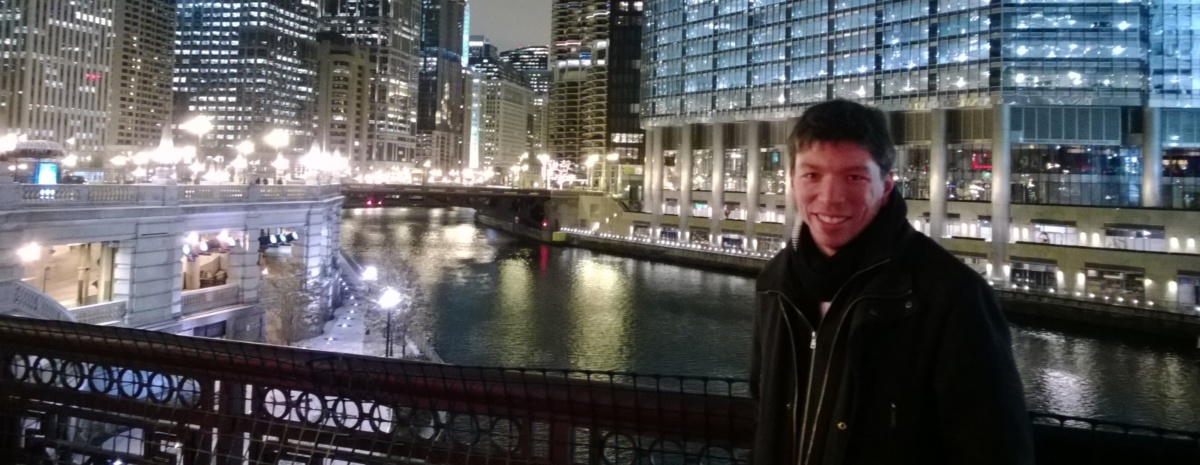

I have to say I think I felt justifiably proud of being at the Cambridge Union Society tonight, attending a recording of The Doha Debates. The motion was ‘This House believes Britain’s role in the Middle East is in terminal decline’, to which – to my surprise – I ended up voting against. This was partly because the speakers in favour seemed to utterly misread the question as having the word ‘positive’ inserted – arguing endlessly that Britain had played a negative role – but of course, missing the point. The speakers against (including, oh shame of shames, Malcolm Rifkind) were not there to argue that Britain’s role hadn’t declined, or that America wasn’t by far and away the most important power. However, do we still have ‘a role’? I believe so.
Anyway, the reason I felt proud of being in Cambridge was, of course, because at the very same moment the Oxford Union was trying to conduct a debate on ‘free speech’ with Nick Griffin and David Irving as invited guests, in the face of some considerable protest. I’ve thought about the two sides to this debate a great deal. It’s surely common currency that these are two repugnant men with repugnant views. But should they be given a platform to be ‘crushed in debate’, as the President of the Union has insisted, or not?
In the end, I am opposed. Speaking at the Oxford Union is not some ordinary right of free speech – it is a privilege extended to those judged worthy to make a useful contribution. David Irving is liar: a man who falsifies evidence to further his anti-semitic views, and not an academic. Nick Griffin is simply a leader of a bunch of thugs with some limited media skills. They aren’t intelligent, thoughtful voices to bring to a debate on the important issue of free speech. It would have actually been better to debate them on their very policies, rather than elevate them into authorities on a subject they are not qualified to speak on.
Furthermore, we live in an age where both David Irving and Nick Griffin are perfectly able to publish their message – via the Internet, for one – in a legal manner which is open to all to access, if they wish to do so. Inviting them to the Oxford Union simply seems a publicity stunt which was ill-considered, and for which those responsible are now genuinely obliged to press ahead with rather than make martyrs out of these men. Perhaps this is true: perhaps to row back at a late stage would have only made a bad situation worse. But they should never have been invited in the first place.
Almost done! Just need to print out my 8th and final weekly essay and hand it in this afternoon before I’m free of reading and work. I’ve got supervision tomorrow of course, tutorial and DoS meetings, and lectures until they finish on Wednesday, but I’ve still now got almost a full week until I go home on Sunday morning to wind down. Hurrah for short, intense Cambridge terms!
Something which I seem to have neglected to mention thus far is student newspapers. We have two: Varsity, and The Cambridge Student. Put simply, I prefer TCS, though that’s mainly because its editorial tone doesn’t smack of snobbishness. However, their interview with Richard La Ruina is amusing me at the minute, partly because the interviewer (Ed Cumming – the same one who annoyed me early on with his ridiculous comment pieces) seems enthralled by this ‘professional pick-up artist’ and talks about ‘girls’ in the same way one might talk about an intriguing yet rare species of wildlife. My particular favourite bit would be this:
“Given that you can get with any girl, do you have any particular type?”
“Not too specific. I like tall, slim and curvy with blue or green eyes. Latvian, Swedish and Brazilian girls all have looks that I like.”
This high life is taking is toll though: he’s “become very fussy and it is difficult to feel as emotional or excited”. Still hasn’t stopped him from “kissing hundreds” and sleeping with “about 50” women in the past 18 months though! (Question: who measures things in 18 month periods? That’s quite unnatural isn’t it? Have you ever referred to ‘the past 18 months’ of your life?)
Oh, Ed and Richard, Richard and Ed: run off together?
Anyway, I’ll get back to getting this essay handed in shall I? 
I went to this exceptionally geeky talk on the history of the Tube last night. Perhaps unsurprisingly those who did show up seemed to be from North London (can’t think why… ) which means certain key words or phrases: ‘Ken Livingstone’, ‘Jubilee line’, ‘Silverlink’ get everyone nodding or shaking their heads in unison. My justification for going, by the way, was that it was my night off but after a (lovely!) pub meal together most people had to go back and answer the demands of essay writing. So what else could I do, really? 
Readers of Willesden’s local press (that’s all three of you then!) might be tremendously excited to know that a photo of me in a grey hoodie – not sure if that was on message or not – might be working its way to you as part of an Access promotion for people who went on a shadowing scheme and are now volunteering to be shadowed themselves. I did note the rather uninspiring lack of ethnic diversity in the group photo, but hey, I’ve just been brought up to follow the now rather clichéd idea that these things should always be balanced. To be fair, I was also much more concerned by the terrible strain on my knees when having to crouch down in the front row of a group shot! I can’t remember if RV ever exacted such horrible cruelty on its subjects, but I hope not
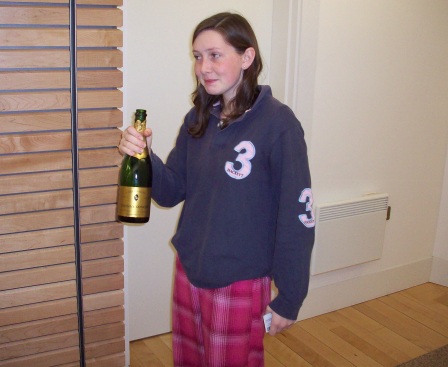
Let’s liven up this rather uninteresting post with a photo of a drunkard:
A drunkard!
As the fancy widget on the right now indicates: more on Facebook!
Well well, if that dramatic title doesn’t draw you in I really am at a loss as to how to ‘grab the reader’s attention’, as we said in GCSE English. Dreams are perhaps an appropriate subject for this post, since this week Joe bought a lottery ticket after dreaming he would win. He didn’t. I think overall my dreams last night were rather more exciting, though equally unlikely to be prophecy.
Last night, I first dreamt that I woke up in a hotel room with my sisters before noticing out the window that a building across the road was on fire. So naturally, I started to get changed to leave, though eventually discarded my socks since they were taking ages to put on. We met our parents in the corridor and left the building – my mother in a slightly suspect move deciding to throw my expensive suitcase onto the fire to “quell the flames”. Hmm. It’s a suitcase, made of fabric, are you sure this was not just an excuse to burn my property mother?
In the second part, we emerged into a parallel universe. Not that we thought it was a parallel universe at first as we walked down a street, but I started to get suspicious when I saw invitations to vote Thatcher even though it was only 1973. And if it is only 1973, then why are all these shops proudly selling DVDs? “Progress has been advanced faster here”, our guide told us. (Our guide? Ur, don’t ask me, she was just there.) If you’re getting worried that the dates of general elections are coming into my dreams, despair further that back in the burning hotel I had argued about child poverty graphs with an old Tory guy.
So most exciting, in the final part of my truly stupendous dream, I met God. I say ‘God’ – to my sci-fi mind God manifested himself as a suave man in a black outfit – so it could have just as easily been Sylar or something. But I certainly thought it was God, because I naturally spent the time arguing about his existence with him. (Yes, really.) He said at one point “I decided that…” which annoyed me, since how could an all-knowing being suddenly ‘decide’ something he didn’t know before? I put this to him, but he just gave a typical evasive answer and then took advantage of my distractions (I was fighting with Katie) to disappear. As you do.
Overall, I have to applaud my subconscious mind for that effort last night. Combining deep political and theological questions with a fast-moving science-fiction tale and plenty of action is no mean feat. However, as you may have gathered, there were a few too many loose ends and unanswered questions. My final rating: 7 / 10.






 Linda Moffitt on Colombia: “Such a sweet memory of the four of you meeting up in Colombia!” Dec 2, 07:42