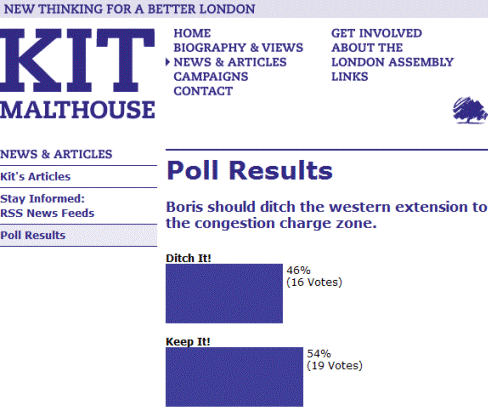
One way of looking at it
At least that’s one page hacked by the readership rather than an outside agency, eh Kit?
SexFest ’09. That’s my fourth. And four years is a long time – long enough for us all to have grown up, matured and put away childish things. (1 Corinthians 13:11, fact fans.) It’s embarrassing now to think back at how silly we all were – can you believe that we used to have celebratory midnight pillow fights? But that nonsense is all behind us now. We’ve moved on.
At SexFest ’09 we had a celebratory midnight balloon fight 
In all childish-seriousness (I  childish things) I don’t think I will ever tire of the little spark of amusement generated by the nonchalant mention of SexFest in conversation. “I haven’t seen you in ages – not since SexFest?” Next year is going to be a challenge though… SexFest 10? SexFest X? SexFest 1010*? And are people going to start saying ‘twenty-ten’ or stick with ‘two thousand and ten’? Well, we’ll see in due course – and happy 2009 in the meantime!
(*Not a typo.)
~
The Wit and Wisdom of My Mates And I: Part 5
Part 5: SexFest Special
“Lizzie was coming out of the rooms as I went in. She was dressed as finely as ever, and she was not alone; a young man was with her, with whom she appeared to be very intimate. She coloured when she saw me, and seemed very uncomfortable.
“Are you better?” she asked.
“Yes,” I said, “and I’m going home to-night; where shall I find my clothes?”
She went into the next room to get them out for me, and I was left alone with the young man. He stood with his back to the fireplace, and with his hands in his pockets. He tried to make himself very agreeable by talking in a familiar off-hand way, and from what he said I soon discovered that I was quite forgotten in the Baker family. He had taken my lodgings and my place in every way.”
You guessed it: it’s time for the long-established (this being the third year ) review of the year! So, what on earth happening during 2008?
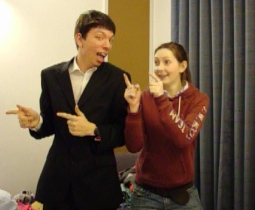
Never-before-seen dancing!
January
New Year’s SexFest ’08 at Joshua’s was the biggest yet – no doubt helped by the beautiful sponsorship banners which Lucy and I created for the event. The rest of the holiday was spent with the greatest people in the world attempting but failing to play The War On Terror board game and watching the powerful film The Kite Runner. Back in Cambridge I danced to Dale’s Supermarket Sweep with Sophie and started Themes and Sources classes which, for all their stresses, did introduce me to lasting friends Andrew (“Andreas!”), Matt (“If we’re honest…”) and Caroline (“your token Tory”). But January was also a sad month: my Grandad died, although his funeral was a fitting tribute to a long life.
February
In the Cambridge bubble we had our amazingly scrumptious History Society Dinner which was also probably one of the first proper chats I had with Abi. Lucy and I had our second anniversary, Saoirse visited and was forced to sign a form at the University Library promising that she wouldn’t learn anything and I freaked a few people out (slightly) by beating myself up when the Internet was down. Oh, and I got married to Sophie! This month I also saw the crazed Stephen Green, the slightly mad Nigel Farage and the very sane Sir Richard Dearlove speak. Meanwhile, in the real world, the word ‘nationalisation’ returned to the scene: cue heady excitement and frequent pleas for the railways to be next.
March
March began with a pheromone test, dinner with mum and everyone blogging photos of their desks. Term was winding down by this point and we spent evenings playing with Jenga bricks, sonic screwdrivers and *laughs* Dungeons and Dragons – the latter clearly a singular aberration. And then I was back in London again, where a totally different kind of life instead demanded Jenga Truth or Dare, Junior Pictionary and bubble mixture. Lucy and I also invented (for ourselves at any rate) the Tube game – hurrah for South Acton! – and had The 39 Steps (not) ruined by a giant brass bar. I also went unsuccessfully ice-skating with Oliver and Abi (gulp) but danced highly successfully with Scott at Josie’s 18th. But perhaps March will best be remembered by one great discovery above all others… I speak, of course, of the mighty Peggle.
April
Ah, April, the month in which I tried my very best to get Ken Livingstone re-elected by handing out leaflets, phoning up people in Kew, pushing leaflets through doors and even persuading Saoirse to help! Meanwhile, 2008 proved to be the year of the dinner party with Abbi hosting April’s great get-together. My mum and I rekindled our geek visit tradition with the London Transport Museum and the Royal Courts of Justice whilst Lucy and I ate fudge in Stratford upon Avon. Then: Easter term began with the terrifying prospect of a mock exam quiz (thanks, Sophie!) but also the amazing surprise of Oliver and Abi’s beautiful Dalek cookies. This was also the month in which we finally all went punting together and – slightly momentously – I actually cast my first proper vote in an election. Would democracy turn out to be any good?
May
No, no it would not! May opened with the installation of Mayor Boris; true recovery from this event still eludes me even after the subsequent evenings of wine, ice cream and Doctor Who in its aftermath as well as comfort-buying a new phone. In fact, come to think of it, this was also the month that of the Sainsbury’s ID outrage, the stolen pizza (lest we forget!) and another wrong-headed final of The Apprentice. Did anything good happen? Well, naturally, as Abi and I reached our creative peak in choosing to spend our History Society budget on little badges. Yay 

Fun at the Ball
June
By contrast June was a very happy time: the final weeks of my first year of uni went by in a warm haze of picnics and barbecues – and the Caius May Ball was one of the most amazing nights of my life. A couple of days later it was my 19th birthday and amidst all the generous gifts was Oliver and Abi’s beautiful dartboard of hate figures, something which really touched me given all the effort that went into making it, as well as Lucy’s highly addictive Underground board game which subsequently saw much play. I also visited Worcester, went on an joint expedition to sample the delights of the Shoreham Village Fête in Joe’s village and – one afternoon on a Hampstead Heath picnic – found in Sanna and Saoirse willing companions to launch the brilliant Book Club.
July
I started an important journey in July: to finally watch the original Star Wars trilogy. Properly. And so I did, but there were plenty of other distractions too – Abbi’s Dirty Pirate Hooker Party, the Waseley Prom, Barrie Birch’s leaving do featuring memorable live teacher performances, swimming in the Hampstead Heath ponds and visiting Andrew in Cambridge for some delicious hot dogs and – naturally – plenty of wine. And those films and plays: The Dark Knight, Midnight & Magnolias at the Tricycle and ‘Best Film Ever’ The Forbidden Kingdom. I finally got my cheesy photo with Ken at the supporters’ party – bring on 2012! – and even managed to do my usual stint of work (actual paid work ) for the UCL summer school. Hurrah!
August
Aw – the family summer holiday is far from dead and this year was spent relaxing in Croatia with a week each in Korcula and Dubrovnik. This was also the month of A2 results for Lucy, Josie, Nic, Andy (and the rest!) as well as GCSEs for Natasha – all well deserved. Mamma Mia was in cinemas, Let There Be Love played at the Tricycle and Robert took his turn to host our dinner party antics. I also spent some time with Matthew – always a pleasure – and indeed ended up sitting on the curb outside a packed pub with him and Joshua one night musing about life.
September
Others may return to school but September is still the summer for me! And rather than do coursework I carried on having fun: particularly so on the night that Natasha and I cooked huge quantities of spaghetti for everyone. That evening was a pleasurable blur although Abbi’s cheese mix CD was not only much-played but prompted the creation of my own musical compilation. Over in Warwick Lucy was traumatised by a laughing tourist at the ghost experience whilst back in London The Boy With Striped Pyjamas left us all unable to speak long after the credits rolled. I also saw Die Welle and read Bad Science, the latter of which instantly became one of my favourite books.
October
Agh, the second year already! In October I moved into Mortimer Road and discovered Merlin, the SAECULUM and wordles – not to mention managing to resurrect my beloved Ready Brek from my childhood. Peggle struck back with Peggle Nights, a chance encounter with Patrick from April’s Ken campaign led me to see Henry V and Sanna came to both visit and marvel at demi-god Magnus Ryan. Plus: I had my first ultra-late-night-essay-writing-binge.
November
Perhaps in realisation at how crazily quickly time was passing there were further visitors: my parents came up for quintessential afternoon tea with Sophia and Joshua arrived to challenge Abi to Peggle duels, eat bumper portions of waffles and take me to see The King Blues for a brilliant gig performance. Of course, there was also the night in which we all stayed up to watch Obama sweep to victory – and sweet landslide victory indeed! Russell T Davies is not quite of such worldwide importance – although he comes pretty damned close – and on an evening at the National in London he graciously signed a copy of his book for me… and Natasha, and Katie. In addition – Reindeer Post was launched, Sir Christopher Meyer spoke to Peterhouse and Pride and Privilege proved perfect entertainment for me and Sophie. Oh, and on a visit to Sussex I discovered the irreplaceable children’s classic My Mates and I!
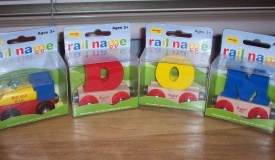
Abi’s gift: sums me up, really
December
Winter is freezing in Cambridge and doubly so if your coat lacks any buttons – but never fear, because in the final week of term there was celebration, raucous late-night beer-fuelled singing, a visit to Newnham and Doctor Zhivago with Owen’s Russian night. Back at home, Promise – who I’d happily seen a lot more of over the last term – braved the Self household to come round for dinner. Secret Tikoloshe proved loads of fun at the Secret Vegetarian Festive Dinner before Christmas came and was as lovely as Christmas always is. And in the final few days of 2008 we saw lots of family in Suffolk – hi Julie! – and Abi presented me with yet another amazing present. How can I ever repay these people?!
Well, we’ll see if I manage it in 2009 Onwards to SexFest ’09!
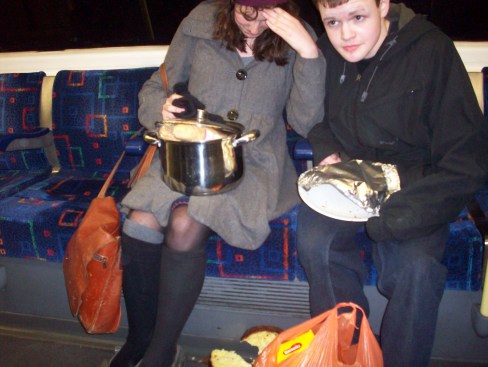
I’ll start with the obvious first: as others have blogged it was the Secret Vegetarian Festive Dinner on Saturday night – and what an amazing party it was! The fairly recent tradition of holding ‘dinner parties’ during the holidays continues to snowball in scale and a full thirteen people made it to Abbi’s house including her Aussie friend (the lovely Jen) and Saoirse’s boyfriend, otherDominic, who deserves much credit for jumping into a perhaps ever so slightly intimidating situation. (I distinctly remember a group of us gathering on the sofa after they had left to discuss how cool he was, so it clearly paid off.) We also played Secret Tikoloshe, a South African Secret Santa-esque game but with more stealing of presents, from which I emerged with a beautiful goose (?) from Joshua: thank you! And loads of thanks to Abbi (for the house) and Saoirse (fort the food) and everyone (for the company) too 
Cheesecake mistake on the way: don’t worry, the photo was priceless
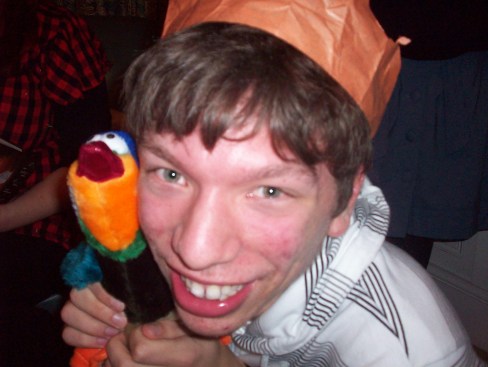
Me and my toy!
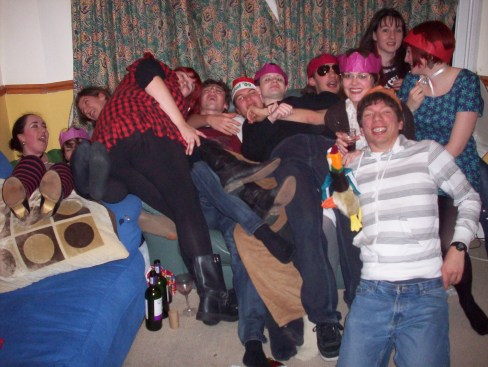
Alice, Saoirse, Tash, Abbi, Robert, Jakov, Dom, Joshua, Lucy, Jen, Emily and me!
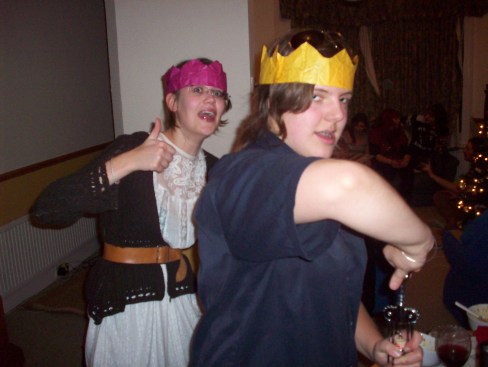
I love this: Lucy with Rosie the Riveter
(There was some recovery needed, on the other hand. Lucy and I both managed to avoid actually being sick that night – although it was a close-run thing – but were clearly tired enough to spend much of Sunday playing Monopoly…)
Right, the plays!
- Hamlet – Wednesday afternoon – Yes, I was lucky enough to bag a ticket at the last moment to go and see (not) David Tennant in Hamlet. I wasn’t disappointed in the slightest, though: it brought out plenty of Shakespeare’s wit and depth (aw, Shakespeare!) plus had Patrick Stewart being awesomely evil as the villainous Claudius. And it’s interesting how having studied the play – and thus knowing exactly what’s going on despite the slight language barrier – really did add enjoyment rather than boredom.
- August: Osage County – Thursday night – We saw this as a family and were all struck by the incredible emotional journeys undergone by the actors each night in a play that’s almost as long as Hamlet. There isn’t any family that isn’t somewhat messed up but this Oklahoma clan have their problems distilled and concentrated: great fun to watch and well worth seeing if you can.
- Loot – Friday night – So finally, Lucy and I saw this at the venerable Tricycle Theatre and it’s probably the hardest play to pin down, although discovering afterwards that it originated in 1965 explained a few things. A darkly comic farce, I wasn’t sure about it until the introduction of Inspector Truscott (David Haig): a character who stands head and shoulders above the others in both writing and performance and totally stole the show. Of course, no modern audience is going to be shocked by a satire against the British police and indeed there was one very funny moment when a man sitting behind us jokingly stood up as the national anthem was played before the curtain opened: much mirth all around, but it does rather demonstrate that Loot is no longer going to quite have the same sting as it once did. Still, a great show!
In the past week or so, I have, in no particular order:
- Clapped for Tasha at tonight’s certificate evening at QPCS
- Laughed lots as Ms. [censored] bitched about Mr. [censored] afterwards: “he’s brainwashing the children!”
- Seen the slightly weird but worth watching Waltz with Bashir with mum, and eaten ice-cream as I did so (naturally)
- Bought lots of Christmas presents without leaving my desk (I’m not saving Woolies, sorry)
- Got a lovingly-branded Christmas card from Nic. Merry Christmas back!
- Nasally asked Sanna for “more fire please” (because… oh, never mind) whilst admiring the fact that her kitchen table is always covered in tasty snack food
- Really enjoyed the resumption of Book Club
- Gorged on a double bill of Merlin with Oliver and Abi whilst also greatly admiring his provision of food (I do just go around eating other people’s food, don’t I?)
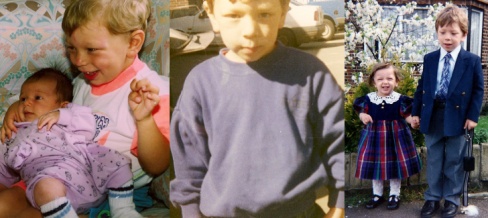
- Uploaded some newly scanned old photos of mine onto Facebook – but a taster for the Facebook-deprived now follows…
The camp, the ‘working class Northern’ and the suited
Obviously, my next blog will be back to its emotional and reflective self





 Linda Moffitt on Colombia: “Such a sweet memory of the four of you meeting up in Colombia!” Dec 2, 07:42