I have a question. You know those mornings when you wake up – bright and early for whatever you have to do – and then you just pause to lower your eyelids for a picosecond and then oops you’re glancing at your watch and it’s Time To Get Up (And Skip Washing And Breakfast)? Those mornings like this morning? Well – why do I always seem to manage to wake up again just at that moment where it’s not too late to make it if I literally jump out of bed, pull on some clothes and rush out the door? On one level it’s quite handy, but at the same time it does create a lot of hassle compared to just sleeping straight through. But seriously… is it actually not just coincidence? Given that we seem to be able to wake up just a few minutes before the alarm was due to go off in the first place, it’s perhaps entirely possible that your body can calculate the exact number of minutes of sleep which can be squeezed out. I don’t know… scientists?
Anyway, it was definitely worth rushing out to lectures in the end (without any breakfast – did I mention this? *grumbles*) for two reasons. Reason One is that my second lecture was on Aristotle and against all my expectations I managed to fall in love with the guy. He’s still barking, naturally, but his critique of Plato makes him so much more sophisticated and amenable to me by hinting that perhaps thoughts of an objective, transcendental ‘good’ are utter nonsense. (He doesn’t quite follow the path to moral relativism, you understand, but he leaves Plato behind in the dust.) Reason Two – and god, Reason One was only supposed to take up a sentence: this blog is going to be severely over-long… – was that Abi phoned as I was speed-walking on an empty stomach (seriously, no breakfast!) with the news that she was going to London this afternoon with some friends to see Russell T Davies, only one of her friends had sadly been forced to pull out, and perhaps I would like… of course I would like! Yes, yes and yes, hurrah! (Timing was still playing crazy games with me though – it just would be the case that I could make it on time but only by rushing back home from supervision.)
Oh, talking of supervision! (You don’t care about supervision, I realise, but then again you care even less about stuff in brackets. Somebody should write a script to just strip them out of blog posts.) I’ve been moving around supervisors this term. Grad students, mostly, and the combination of the two makes most people imagine it would be really annoying, but it’s not. It’s really, really not – as I try and stress to my anxious DoS – partly because grad students are relatively young and seem eager to do a good job, so you get pages and pages of feedback on essays. I love it! And finally someone has taken to commenting on my writing style: sorely needed, because I’m not sure it’s changed from GCSE. (In fact, after this blog post I’m going to e-mail him about tenses. That’s right – what a truly exciting life I lead!)
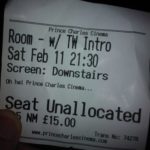
Anywayyy – Abi and I made it to London and to the National Theatre to see Russell. He was being interviewed by Benjamin Cook to promote their book – The Writer’s Tale – which is a collection of e-mails between the two during the making of Series Four of Doctor Who. But it’s really not just another ‘making of’ book – marvellous as that would no doubt be – but a vivid insight into the writing process as it happens, with all of the pain and raw emotions that go along with it. Sanna would love it, and I mean that entirely genuinely and not just as a sneaky way to foist Doctor Who on her. I love his conception of the Maybe – that living collection of half-formed ideas bubbling in your head as you go about with life – because, even though I’m certainly no writer, I do have a faint echo of it myself. I think everyone does, really. Like with this blog, actually, which came to me in fragments of sentences which I’m desperate to write before they go. Or with the little silly things I make – like that poster which kept me up last night, possibly contributing to the stressy morning – which all begin as small but burning ideas. I may get mocked sometimes for doing such things, but believe me, for every cartoon or political rant there are many more ideas that pop into my head which later morph out of all recognition or are simply discarded. Mostly when I’m walking, actually, and I have to make a note on my phone whilst trying to keep an eye out for bicycles.
Thank you!
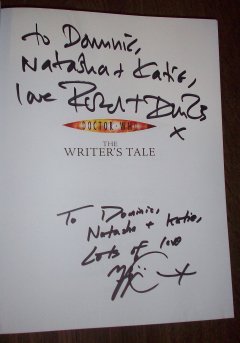
I’m writing all of this because I started reading said book on the train back home, of course, which is crazy – I never read on trains as it gives me headaches. (Well, it was dark outside and that helps. But still.) I also queued to get it signed, and have enormous respect for the fact that having spent an hour signing books people like Russell and Benjamin can pull off that trick of generating a five second conversation of more than mere pleasantries. It must be horrible, I suppose, continually generating new conversations with people at such a rapid rate without being disappointing. But hey – they did, and also both signed it for me, Tash and Katie, which was most generous. There you go, Katie, I’ve paid you back for the Peter Davison autograph now! Cleverly I later managed to pour Coke over the book, but luckily not fatally and somehow it makes the book feel even more like my copy. Y’know, the copy with stains. 
The coke-spilling occurred during a lovely dinner afterwards on the South Bank with Abi and two of her school friends. I love that part of London, I really really do. That bridge across the Thames is just so utterly magical – the big, bright pulsing life of the city stretched before you, moonlight competing with the urban glow to reflect on the river until a boat cuts through, filled with people. I cannot imagine, as I walk across that bridge, why anyone would want to live behind neat suburban hedgerows and driveways. It’s a lie, of course: almost no-one actually lives in amongst that London, and the people that do are mostly huddling under the bridge for warmth and begging for small change. But it doesn’t matter, not with the imagined community of a city – even a city of millions upon millions of people. (Especially so, in fact.) It doesn’t matter at all.
Abi’s school friends were very interesting, by the way. (Will they read this? No, it’s OK, of course they won’t read this. No matter anyway, I’m only going to be nice!) Smart, confident, alive. Just like most people on Earth, of course. (Even though one of them voted for Boris – but that’s OK, I enjoy talking to such people really. It’s much more fun than the careful dance you have to do when talking to someone you agree with, where you’re constantly nervous you’ll stumble across a tiny split that will wedge you apart. And the morning after Obama’s victory, the conversation I had with two right-wing friends was more insightful, I think, than simply victory cheers.) But yes – it’s always fascinating to meet other people’s old school friends. A little insight into the millions of parallel worlds of friendship groups that exist, and a chance for me to secretly wish I could cast a seductive spell and tempt such people into the comprehensive school system (apologies), where they’d be such stars.
God, I must shut up. Goodnight! It’s alright, it’s alright, to be standing in a line (standing in a line)…
Woohoo! 
What follows is a quick-and-nasty compilation of our election night. Ah, so very happy…
I’d like to start this post with special recognition of life’s wonderful moments of Matthew Weinreb. *ring ring* “Hello?” “Hi, it’s Matthew here. I was wondering if you could settle a debate for us… is it true that our eyes see in 2D but our brains convert this to 3D?”
(It’s not, by the way. Not really.)
Moving on – last night I followed the pattern established since the dawn of time by responding to Nic’s fully fledged website makeovers with small cosmetic changes. The theme this time round is interconnectedness: taking a leaf from Abbi, blog posts now show up (properly!) on Facebook as notes*, whilst in return my Facebook status can be found both here and on the home page. (What do you mean you never leave your RSS client? My homepage has a lovely photo slideshow y’know!) Once I was done I sat back and suddenly felt that this web might actually get all too much one day 
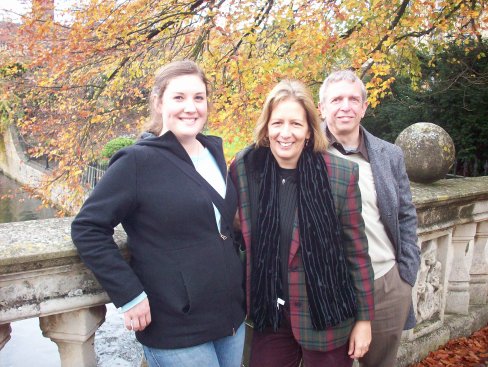
Touring the ‘Bridge
Speaking of interconnectedness, today I was delighted to meet yet another American cousin which my family is so proficient at producing! Sophia was lovely, though, and coped admirably with the fact that my parents and I suddenly seemed to have a strange desire to be ‘English’ and go for afternoon tea. (Having said that, I’m not complaining in the slightest with any liberal interpretation of afternoon tea that includes chocolate fudge cake.) Of course, we also talked lots about the slight matter of an upcoming election – with only the slightest admissions that we don’t actually have votes – and I was hugely relieved to know that Sophia had voted. Mostly because I’m already hugely jealous of Jamie and her ilk for their votes already, and it would be a bitter blow if they didn’t actually use them.
The election is, obviously, important. Amongst the reams and reams that has been written on it, this editoral from the New Yorker magazine – republished by the Guardian – sums it up best for me. It’s all worth reading, particularly for tackling the vital Supreme Court issue, but a choice quote:
A presidential election is not the awarding of a Pulitzer prize: we elect a politician and, we hope, a statesman, not an author. But Obama’s first book is valuable in the way that it reveals his fundamental attitudes of mind and spirit. Dreams from My Father is an illuminating memoir not only in the substance of Obama’s own peculiarly American story but also in the qualities he brings to the telling: a formidable intelligence, emotional empathy, self-reflection, balance and a remarkable ability to see life and the world through the eyes of people very different from himself. In common with nearly all other senators and governors of his generation, Obama does not count military service as part of his biography. But his life has been full of tests – personal, spiritual, racial, political – that bear on his preparation for great responsibility.
Whilst following the US election, it suddenly really hit me for the first time: we’ve just lived through eight years of one of the worst US Presidencies ever. In history. And I really mean that – it’s not just heat of the moment anger at a bad President, but what will probably turn out to be the accepted historical view in decades to come: George W Bush was a failure of epic proportions. Most people have at least something going for them: Johnson escalated Vietnam, but had a decent domestic vision at his heart. Nixon was a crook, but pretty successful at international relations. Reagan stood for an ideology I fundamentally disagree with, but at least – as with Thatcher – he was a success in his own terms. But Bush has manifestly failed to ‘spread democracy’ as he came to understand his role. And meanwhile he presided over an administration which was corrupt to its very core: a lying, bullying government which tore up freedoms at home and abroad until the United States of America – the world’s superpower and the nation founded on the principle of liberty – was reduced to pathetic and shameful weaselling trying to redefine away ‘torture’ so that it could torture.
And the cost has been immense. Not just for Americans growing up in a country where it is increasingly difficult even to afford healthcare, not just for the residents of New Orleans who witnessed first-hand what ‘compassionate conservatism’ really means and not just for those still languishing in Guantanamo Bay. We will all live with the cost – for a generation – of having grown up in a world where America came to be seen as a tyrant. Because unless people around the world have trust in the United States – a basic level of respect and admiration for the country with the power – how can we possibly tackle the world’s great problems of poverty, climate change, dictatorship, war? I don’t loathe Bush because I hate America – I loathe Bush because for all these years he has deprived America, and the world, of its enduring goodness.
Yesterday was one of those bumper bonanza days: by the end of it you can’t quite believe that it was all compressed into a single day. The omens, it must be said, were not all that promising. The night before an essay on the New Deal lay barely half done, and whilst I would have liked to have stayed up all night on it I also realised my grip on writing was becoming so weak that I couldn’t even stay in the right tense. (Pfft, you think it’s easy just because it’s history and thus ‘past tense’? How very naive…) But I did try, for a while, due to the fact that I was also entirely unable to lie horizontally without coughing at *cough* a rate *cough* of about *cough* seven *mega-cough* per minute. Eventually, however, I did get to sleep and resolved to get up early to finish this essay before Sanna arrived to visit. The alarm was set for 6.30. Then changed to 7, because I’m not a masochist.
Early morning Dominic scoffed at this incurring into his territory and wisely ignored the alarm. And soon enough Sanna arrived, and learning from past mistakes I decided getting a taxi from the station to the one lecture of the day would be wiser than trying to impose Dominic walking speeds. After Magnus Ryan had expounded on the saeculum some more (actually, sadly, I don’t think it came up) we went for delicious waffles and my mood was firmly on an upward curve. (Not just because of the waffles, you understand.) This was also helped by my dad sending me the Text of the Month about the upcoming new Doctor (note to journalists from Dominic and Lucy – a ‘new Doctor Who’? No. No, you are wrong). So by the end of Sanna’s visit I was in a much better position to sit down and plan out the rest of the essay in beautiful bullet-point form, before moving on to dinner.
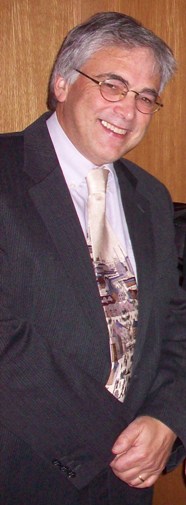
Mark Greengrass
But not just any dinner! No indeed – for as a joint Secretary of the Caius History Society it was partly my job to host Mark and Emily Greengrass in advance of Mark’s talk that evening. Abi and I had made the risky decision of inviting them to dine with us lowly undergrads, which could have resulted in panic and disaster if the infamous chicken burger had been served. Luckily this was not to be, and all went well. Shortly afterwards we were then gratified to see that our e-mail promotion had drawn a not too shabbily sized crowd for the talk, and we possibly accidentally innovated by serving wine before getting into history. It clearly worked, and The Tears of the Last Valois was a very interesting discussion on crying (yes, really) at the French court. I tend to think that it’s quite important for these things to be at least slightly off-beat, as there’s no point in putting on your own Tripos lectures.
Plus, I think Mark Greengrass had a cool tie.
So, the final chapter: on the way back home I resolved that I really would try and dedicate the night to finishing this essay, and Michael wisely advised that the most important tool would be food. So I acquired some bread, a pizza, chocolate chip cookies and tea bags and set to work at 11pm. And lo and behold, somehow by about 2.30am I was done! (And I hadn’t even cooked the pizza…) Feeling very satisfied I finally sent the essay off and called it a day. Only supervision (later today) will reveal if the end product was actually any good, of course, but I feel I can defend it at least. Hurrah!
(Oh, and this afternoon I got an e-mail revealing that someone had left a customer evaluation of this very site. Erm, thanks though I was unaware of having delivered any goods or services at all.)




 Linda Moffitt on Colombia: “Such a sweet memory of the four of you meeting up in Colombia!” Dec 2, 07:42